HOME » Page 10

Blog

  • Start Your Blogging Journey: A Comprehensive Guide

    Start Your Blogging Journey: A Comprehensive Guide

    So, you want to start a blog? Great! Blogging is a fantastic way to share your passions, build an audience, and even make a living. But where do you begin? Let’s break down the process step-by-step.

    1. Find Your Niche

    • Passion: What are you truly interested in? Your enthusiasm will shine through in your writing.
    • Audience: Who are you trying to reach? Understanding your target audience will help tailor your content.
    • Competition: Research existing blogs in your niche to identify gaps and opportunities.

    2. Choose a Blogging Platform

    • Free platforms: Blogger, WordPress.com (free plan)
    • Self-hosted platforms: WordPress.org, Wix, Squarespace
    • Considerations: Customization, ownership, costs, features.

    3. Pick a Domain Name and Hosting

    • Domain name: Choose a memorable and relevant name for your blog.
    • Hosting: Find a reliable hosting provider to store your website’s files.

    4. Design Your Blog

    • Template: Select a visually appealing template that aligns with your niche.
    • Customization: Add your logo, color scheme, and fonts to create a unique look.
    • User experience: Ensure your blog is easy to navigate and mobile-friendly.

    5. Create High-Quality Content

    • Keyword research: Identify relevant keywords to optimize your posts for search engines.
    • Writing style: Develop a consistent and engaging writing style.
    • Visuals: Use images, infographics, and videos to enhance your content.
    • SEO: Optimize your posts for search engines to improve visibility.

    6. Build an Audience

    • Social media: Promote your blog on platforms like Facebook, Instagram, and Twitter.
    • Email marketing: Collect email addresses and send newsletters to your subscribers.
    • Guest posting: Contribute to other blogs in your niche to reach a new audience.
    • Engage with your audience: Respond to comments and messages promptly.

    7. Monetize Your Blog (Optional)

    • Affiliate marketing: Promote products or services and earn commissions.
    • Advertising: Display ads on your blog.
    • Sponsored content: Partner with brands for sponsored posts.
    • Digital products: Create and sell your own products (e.g., ebooks, courses).

    8. Measure Your Success

    • Analytics: Use tools like Google Analytics to track website traffic and user behavior.
    • Key performance indicators (KPIs): Set goals and measure your progress.

    Remember: Building a successful blog takes time and effort. Be patient, consistent, and passionate about your content.
  • Reinforcement Learning from Human Feedback (RLHF)

    Reinforcement Learning from Human Feedback (RLHF)

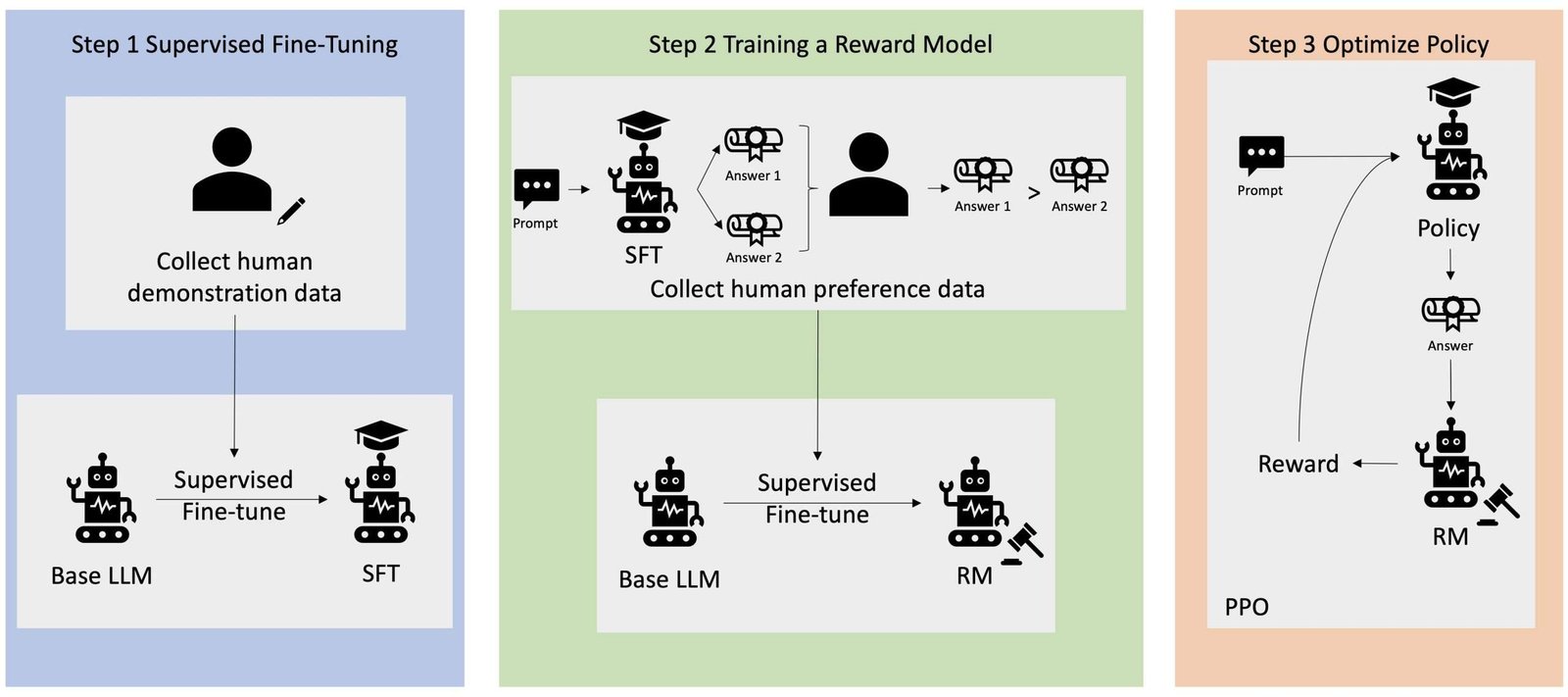
    Reinforcement Learning from Human Feedback (RLHF) is a technique that aligns an AI model’s behavior with human preferences. It’s particularly useful for tasks where defining a precise reward function is challenging.

    Illustration graphic sourced from Amazon…

    How Does it Work?

    1. Data Collection:
      • Human experts provide feedback on the model’s outputs. This feedback can be in various forms, such as rankings, ratings, or direct corrections.
      • A dataset of model outputs and corresponding human feedback is created.
    2. Reward Model Training:
      • A reward model is trained on the collected data to predict how humans would rate different model outputs. This model learns to approximate human preferences.
    3. Reinforcement Learning:
      • The reward model is used as a reward function in a reinforcement learning process.
      • The model is trained to maximize the reward, effectively learning to produce outputs that align with human preferences.

    Key Components and Challenges

    • Human Feedback: The quality and quantity of human feedback significantly impact the model’s performance.
    • Reward Model: Accurately capturing human preferences in a reward model is crucial.
    • Reinforcement Learning Algorithm: Choosing the right RL algorithm is essential for efficient learning.
    • Alignment with Human Values: Ensuring the model’s behavior aligns with broader human values is a complex challenge.

    Applications of RLHF

    • Chatbots and Language Models: Improving conversational abilities and making responses more human-like.
    • Recommendation Systems: Personalizing recommendations based on user preferences.
    • Robotics: Developing robots that can learn from human demonstrations and feedback.
    • Game Playing: Creating AI agents that can learn to play games effectively by observing human gameplay.

    Example: Training a Chatbot

    1. Data Collection: Humans provide ratings for chatbot responses to different prompts.
    2. Reward Model Training: A model learns to predict human ratings for chatbot responses.
    3. Reinforcement Learning: The chatbot is trained to maximize the predicted human ratings, improving its responses over time.

    Challenges and Considerations

    • Scalability: Collecting and processing large amounts of human feedback can be time-consuming and expensive.
    • Bias: Human feedback can be biased, which can lead to the model learning biased behaviors.
    • Safety: Ensuring the model’s behavior is safe and harmless is crucial, especially in high-stakes applications.
  • How to Use AI in Email Marketing?

    How to Use AI in Email Marketing?

    AI is revolutionizing the way businesses approach email marketing. By leveraging AI, you can significantly enhance your campaign’s effectiveness, personalization, and overall ROI. Here’s how:

    1. Hyper-Personalized Content:

    • Predictive analytics: Analyze customer behavior to anticipate needs and preferences.
    • Dynamic content: Create emails that adapt to individual recipients based on their actions and interests.
    • Product recommendations: Suggest products or services tailored to each customer’s purchase history.

    2. Improved Email Deliverability:

    • Subject line optimization: AI can analyze which subject lines perform best and suggest improvements.
    • Content optimization: Ensure emails comply with spam filters and improve deliverability rates.
    • Real-time monitoring: Track email performance and adjust campaigns accordingly.

    3. Enhanced Customer Segmentation:

    • Behavioral segmentation: Group customers based on their actions, such as purchase history or website behavior.
    • Predictive segmentation: Identify potential high-value customers or those at risk of churn.
    • Personalized campaigns: Create targeted email campaigns for different segments.

    4. Automated Email Workflows:

    • Trigger-based emails: Send automated emails based on specific customer actions (e.g., abandoned cart, welcome emails).
    • Customer journey mapping: Create personalized email sequences based on customer lifecycle stages.
    • A/B testing: Automatically test different email variations to optimize performance.

    5. Data-Driven Insights:

    • Performance analysis: Analyze email metrics to identify trends and opportunities.
    • Predictive modeling: Forecast future customer behavior and campaign performance.
    • Actionable recommendations: Receive AI-driven suggestions for improving email campaigns.

    6. AI-Powered Email Copywriting:

    • Content generation: Create engaging email copy based on specific topics or keywords.
    • Tone optimization: Adjust email tone to match the target audience.
    • A/B testing: Experiment with different copy variations to improve open and click-through rates.

    7. Image and Design Optimization:

    • Image selection: Choose images that resonate with the target audience based on visual analysis.
    • Design recommendations: Suggest optimal email layouts and design elements.
    • Dynamic image personalization: Create personalized images for different recipients.

    By incorporating AI into your email marketing strategy, you can achieve higher engagement rates, increased conversions, and stronger customer relationships.

  • How AI is transforming the way we do business

    How AI is transforming the way we do business

    Artificial Intelligence (AI) is rapidly reshaping industries and business operations. Its ability to process vast amounts of data, learn from patterns, and make intelligent decisions is revolutionizing how businesses operate. Here’s a breakdown of key areas where AI is making a significant impact:

    Data-Driven Decision Making

    • Predictive analytics: AI algorithms can analyze historical data to predict future trends, allowing businesses to make informed decisions about product development, marketing strategies, and resource allocation.
    • Customer segmentation: By understanding customer behavior and preferences, AI helps businesses create targeted marketing campaigns and personalize customer experiences.

    Automation and Efficiency

    • Process automation: AI-powered automation can streamline repetitive tasks, reducing errors and freeing up human resources for more strategic activities.
    • Supply chain optimization: AI can optimize inventory management, logistics, and supply chain operations, leading to cost savings and improved efficiency.

    Customer Experience

    • Personalized recommendations: AI algorithms can analyze customer data to provide tailored product recommendations, enhancing customer satisfaction and loyalty.
    • Chatbots and virtual assistants: AI-powered chatbots and virtual assistants can provide instant customer support, improving response times and customer experience.

    Innovation and Product Development

    • Research and development: AI can accelerate research processes by analyzing vast amounts of data to identify new opportunities and potential breakthroughs.
    • Product design: AI can be used to optimize product designs, improve performance, and reduce development time.

    Cybersecurity

    • Threat detection: AI can identify and respond to cyber threats in real-time, protecting sensitive data and systems.
    • Fraud prevention: AI algorithms can detect fraudulent activities by analyzing patterns in transaction data.

    Other Key Areas of Transformation

    • Finance: AI is used for fraud detection, risk assessment, algorithmic trading, and customer service.
    • Healthcare: AI is revolutionizing drug discovery, medical imaging, patient diagnosis, and personalized treatment plans.
    • Manufacturing: AI is driving automation, predictive maintenance, quality control, and supply chain optimization.

    In essence, AI is empowering businesses to make better decisions, improve efficiency, enhance customer experiences, and drive innovation. As AI technology continues to advance, its impact on the business world will only grow stronger.

  • How to Send Cold Emails and Comply With Legal Regulations

    How to Send Cold Emails and Comply With Legal Regulations

    Sending cold emails can be a powerful sales tool, but it’s crucial to follow legal regulations to avoid getting flagged as spam. Here’s a breakdown of key points to ensure your cold email outreach is compliant:

    Targeting:

    • Relevance is Key: Only reach out to prospects who would genuinely benefit from your product or service. Sending irrelevant emails is a fast track to getting marked as spam.

    Transparency:

    • Be Upfront About Who You Are: Clearly identify yourself and your company in the “From” line. Don’t try to trick recipients into thinking the email is from someone else.

    Respecting Preferences:

    • Provide an Opt-Out Option: Every email must include a clear and easy way for recipients to unsubscribe from future communications. This could be a dedicated unsubscribe link or a simple instruction like “Reply with ‘Opt-Out’ to unsubscribe.”
    • Honor Opt-Out Requests Promptly: Process unsubscribe requests within the timeframe mandated by your region’s regulations (usually 10 business days). Once someone opts out, remove them from your mailing list and don’t sell or transfer their information.

    Content and Design:

    • Avoid Misleading Subject Lines: Don’t use deceptive or click-baity subject lines to lure recipients into opening the email. Be clear and concise about the email’s content.
    • Be Honest About the Email’s Purpose: Clearly state that the email is a commercial message or solicitation.

    Additional Considerations:

    • Data Acquisition: Ensure you have a legal basis for contacting the recipient. Buying email lists from unknown sources is a bad idea. Consider methods like attending industry events or using reputable data providers that offer opt-in contacts.
    • Data Security: Store your email list securely and follow data protection regulations like GDPR (Europe) or CCPA (California) if applicable.

    Remember: Staying compliant builds trust and protects your sender reputation. By following these guidelines, you can ensure your cold email campaigns are legal and effective.

    For a deeper dive, consider researching the specific regulations in your region, such as the CAN-SPAM Act (US) or GDPR (Europe).

  • What is Audio Annotation and Segmentation audit?

    What is Audio Annotation and Segmentation audit?

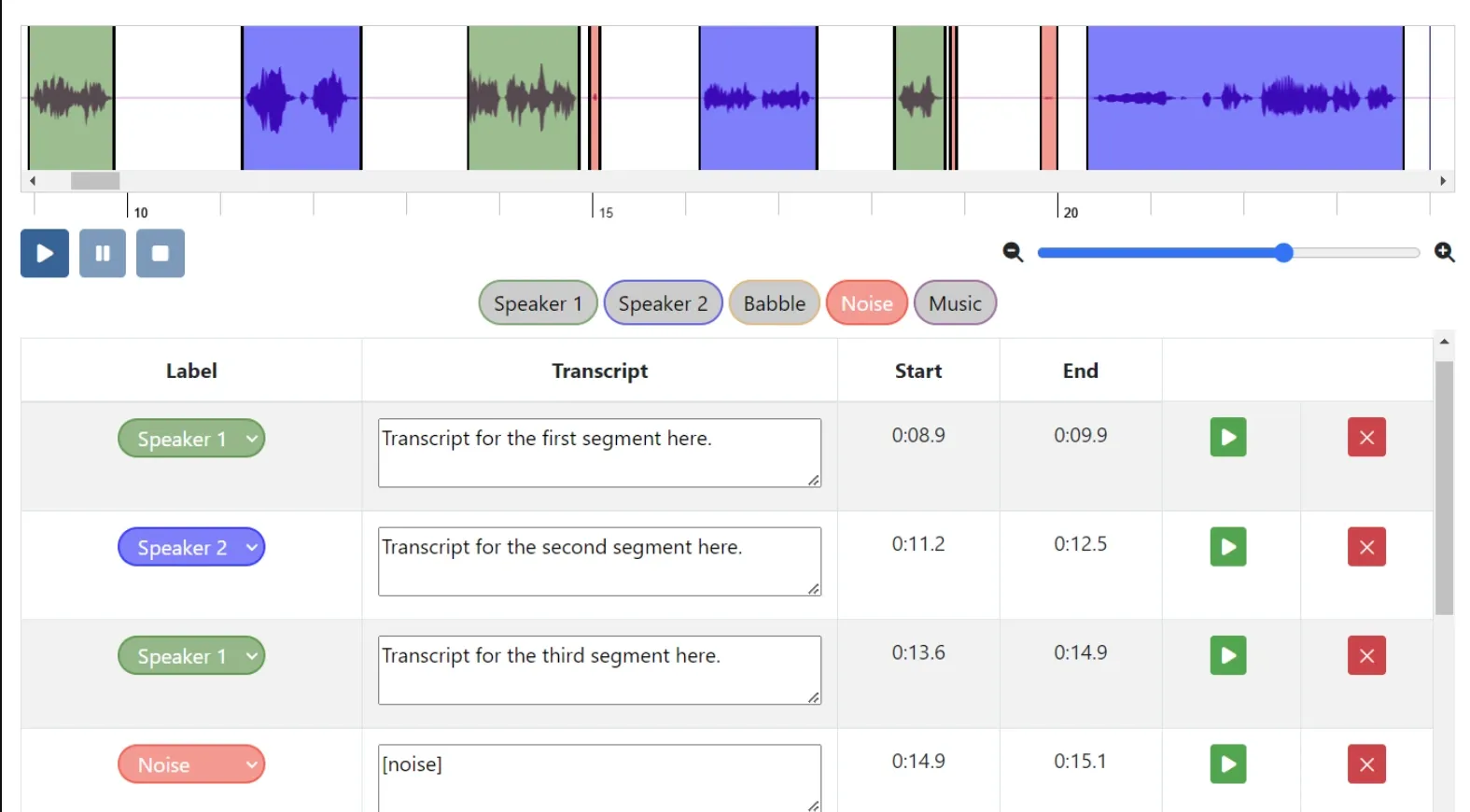
    An audio annotation and segmentation audit is a process of checking the accuracy and consistency of labels and separations made in audio data. It’s essentially a quality control step for data that’s been prepared for machine learning applications.

    Here’s a breakdown of the two parts:

    • Audio Annotation: This involves attaching labels or descriptions to specific parts of the audio. These labels can describe various aspects, like:
      • Speech content (words or phrases spoken)
      • Speaker identification (who is talking)
      • Emotions conveyed in the speech
      • Background noises (traffic, music, etc.)
      • Sound events (doorbell ringing, coughing, etc.)
    • Segmentation: This refers to dividing the audio file into smaller sections based on the annotations. Each segment is then associated with the corresponding label.

    An audit ensures that the annotations and segmentations are:

    • Accurate: The labels correctly reflect the content of the corresponding audio segment.
    • Consistent: Annotators applied the labels and segmentations following the same guidelines throughout the entire dataset.
    • Complete: All relevant aspects of the audio are labeled and segmented according to the project’s requirements.

    By catching inconsistencies and errors, the audit helps improve the quality of the training data for machine learning models. This can lead to better performance and accuracy in applications like speech recognition, speaker identification, and sentiment analysis.

  • Labeling and Annotating Datasets

    Labeling and Annotating Datasets

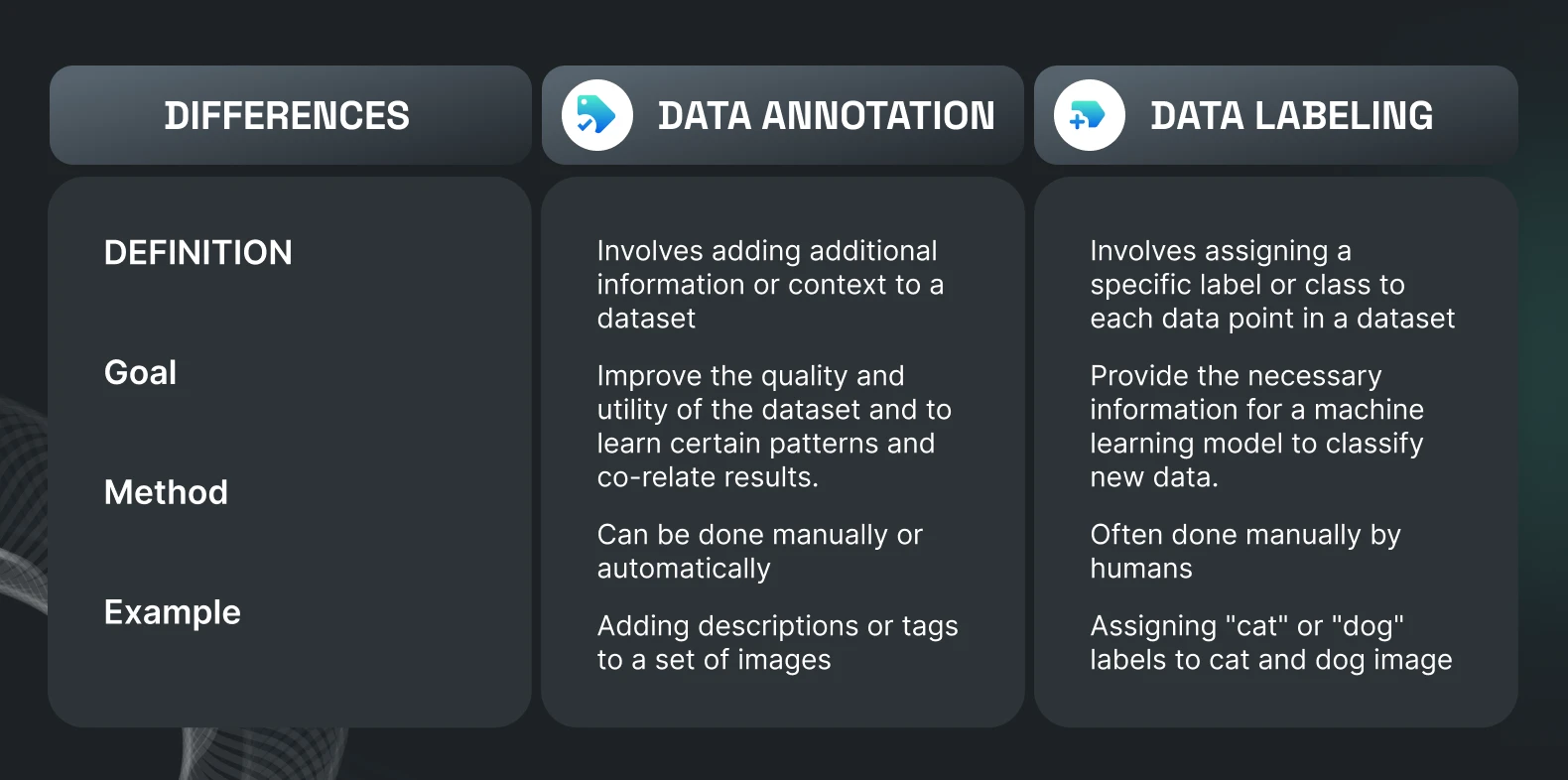
    Labeling and annotating datasets are two closely related processes used to prepare data for machine learning, particularly supervised learning. They both involve adding information to raw data, but with some key differences:

    Data Labeling

    • Focus: Identifies the overall content or nature of the data.
    • Process: Assigns simple categories or tags to the data points.
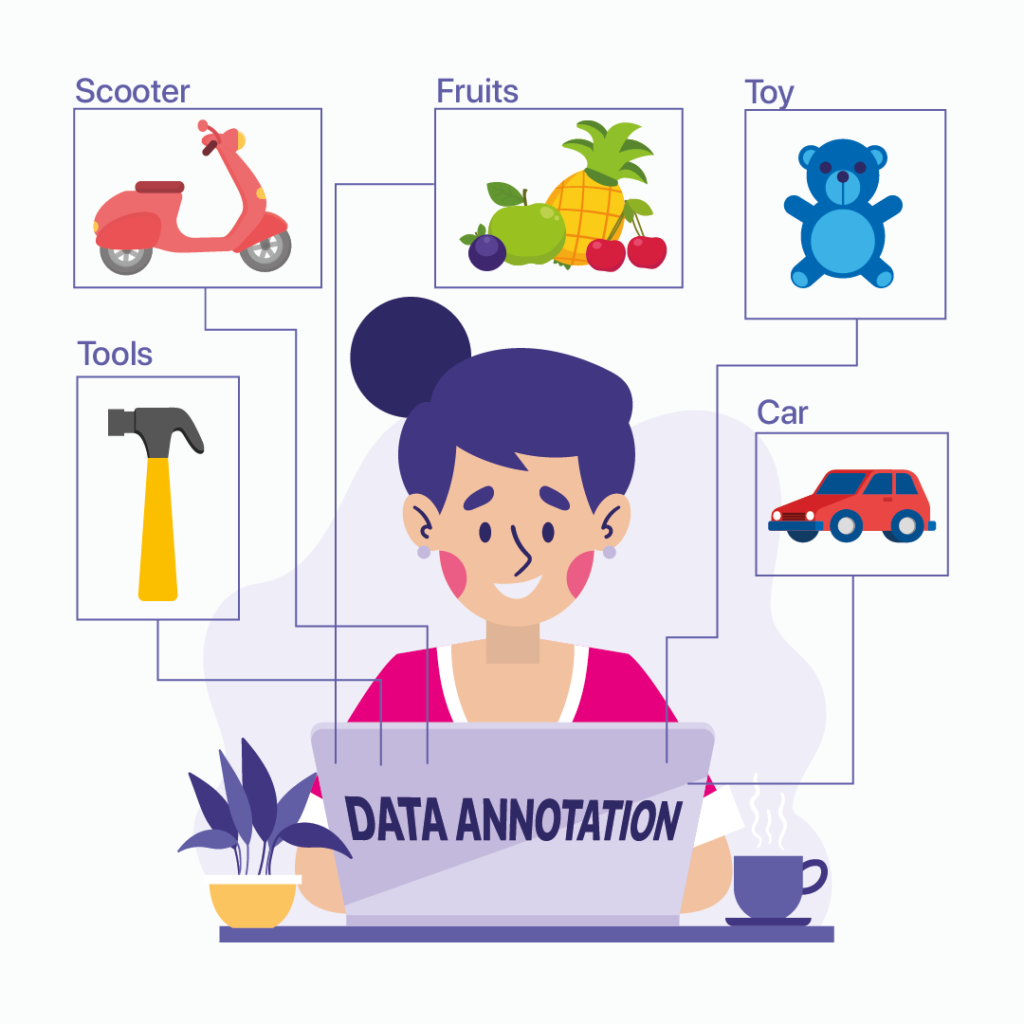
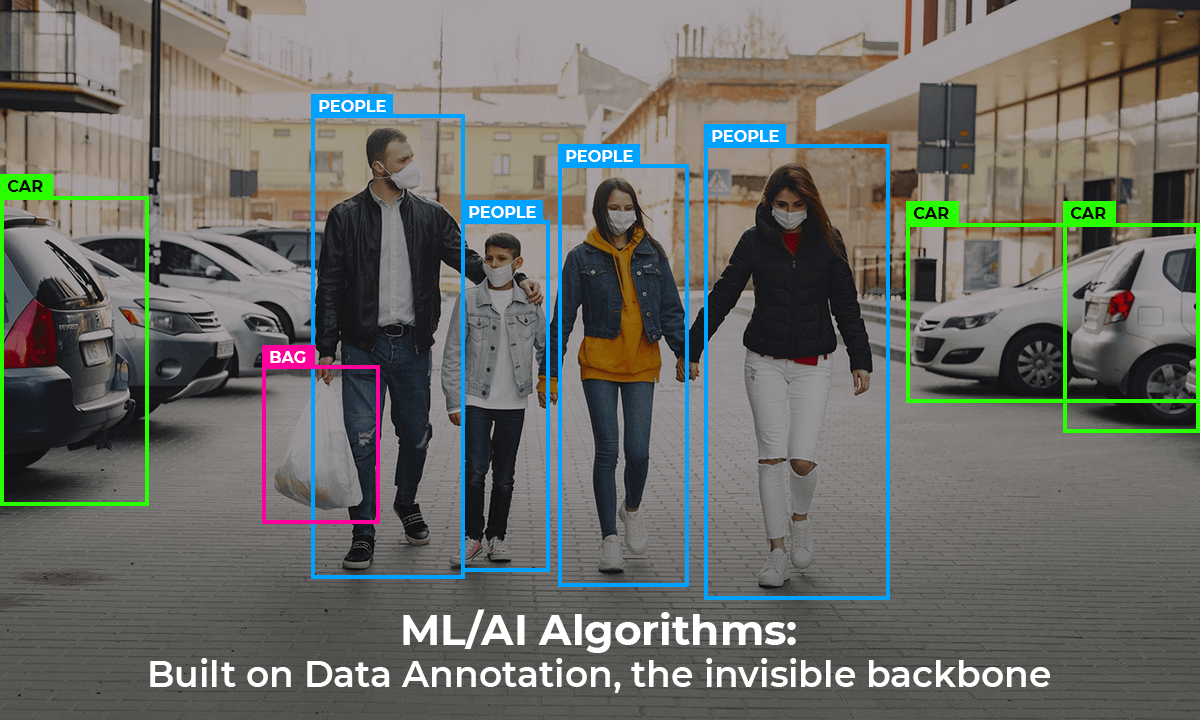
    • Imagine: Adding labels like “cat” or “dog” to images, or “spam” or “not spam” to emails.
    • Example Tasks:
      • Image recognition: Classifying objects in pictures (car, person, flower).
      • Text classification: Categorizing emails (spam, marketing, work).
      • Sentiment analysis: Labeling the sentiment of a review (positive, negative, neutral).

    Data Annotation

    • Focus: Adds more specific details and context to the data.
    • Process: Involves marking up specific elements within the data.
    • Imagine: Drawing a box around a cat in an image, or highlighting key phrases in a document.
    • Example Tasks:
      • Object detection: Creating bounding boxes around objects in images (not just identifying them).
      • Image segmentation: Labeling different regions in an image (separating the sky from buildings).
      • Part-of-speech tagging: Identifying the grammatical function of words in a sentence (noun, verb, adjective).

    Here’s a table summarizing the key differences:

    FeatureData LabelingData Annotation
    FocusOverall content/natureSpecific details/context
    ProcessAssigning categories/tagsMarking up elements
    Example“Cat” on an imageBounding box around a cat in an image

    Choosing the right approach depends on the type of data and the specific machine learning task. For some tasks, labeling might be sufficient. But for more complex tasks, annotation provides richer information for the model to learn from.

  • Top 5 things to look out for when selecting a data annotation provider

    Top 5 things to look out for when selecting a data annotation provider

    When choosing a data annotation provider, the accuracy of your machine learning model hangs in the balance. Here are the top 5 things to consider:

    1. Workforce Location and Diversity:
    • Look for providers with a geographically diverse workforce. This helps reduce bias in annotations and ensures better representation of the real world your model will encounter.
    1. Subject Matter Expertise and Scalability:
    • Does the provider have experience annotating data similar to yours (text, images, audio)?
    • Choose a provider that can scale their workforce up or down to meet your project’s changing needs.
    1. Quality Control Mechanisms:
    • The provider should have a robust quality control process, including multi-stage checks and inter-annotator agreement measurements.
    • Ask about their error rate and how they handle disagreements between annotators.
    1. Data Security and Compliance:
    • Ensure the provider has strong data security measures in place to protect your sensitive data.
    • Look for certifications like SOC 2 and GDPR compliance to verify their security practices.
    1. Ethical and Fair-Work Policies:
    • Choose a provider that offers fair wages and good working conditions for their annotators.
    • Unethical treatment can lead to high turnover and potentially lower quality annotations.
  • What is Amazon Rekognition and how will the data annotation agencies compete?

    What is Amazon Rekognition and how will the data annotation agencies compete?

    Amazon Rekognition is a cloud-based image and video analysis service that makes it easy to add advanced computer vision capabilities to your applications. The service is powered by proven deep learning technology and it requires no machine learning expertise to use. Amazon Rekognition includes a simple, easy-to-use API that can quickly analyze any image or video file that’s stored in Amazon S3.

    You can add features that detect objects, text, unsafe content, analyze images/videos, and compare faces to your application using Rekognition’s APIs. With Amazon Rekognition’s face recognition APIs, you can detect, analyze, and compare faces for a wide variety of use cases, including user verification, cataloging, people counting, and public safety.

    The service is based on the same proven, highly scalable, deep learning technology developed by Amazon’s computer vision scientists, technology that can analyze billions of images and videos daily. Rekognition routinely learns from new data, and we frequently add new labels and features to the service.

    READ Full Article at source: https://docs.aws.amazon.com/rekognition/latest/dg/what-is.html

    Key capabilities

    Image Analysis:

    • Object, Scene, and Concept Detection – Detects and classify objects, scenes, concepts, and celebrities in images.
    • Text Detection – Detect and recognize printed and handwritten text in images in a variety of languages.
    • Unsafe Content – Detect and filter explicit, inappropriate, and violent content and images. Detects granular unsafe content labels.
    • Celebrity recognition – Recognize tens of thousands of celebrities in your images across different categories, such as politicians, athletes, actors, and musicians.
    • Facial Analysis – Detect, analyze, and compare faces, along with facial attributes, such as gender, age, and emotions. Use cases may include user verification, cataloging, people counting, and public safety.
    • Custom Labels – Build custom classifiers to detect objects specific to your use case, such as logos, products, characters.
    • Image Properties – Analyze image properties like quality, color, sharpness, contrast.

    Video Analysis:

    • Object, Scene, and Concept Detection – Detects and classify objects, scenes, concepts, and celebrities in videos.
    • Text Detection – Detect and recognize printed and handwritten text in videos in a variety of languages.
    • People pathing – Track identified people as they move across video frames.
    • Facial Analysis – Detect, analyze, and compare faces in streaming or stored videos.
    • Celebrity recognition – Recognize tens of thousands of celebrities in your stored videos across different categories, such as politicians, athletes, actors, and musicians.
    • Unsafe Content Detection – Detect explicit, inappropriate, and violent content in videos.
    • Video segmentation – Automatically identify useful segments of video, such as black frames and end credits.
    • Face liveness – Detect if a live user is present during face verification.
  • Data Annotation for Advertising Agencies

    Data Annotation for Advertising Agencies

    Data annotation plays a crucial role in the advertising world, particularly for agencies that leverage artificial intelligence (AI) and machine learning (ML) for their campaigns. Here’s how data annotation helps advertising agencies:

    Understanding Customer Behavior and Preferences:

    • Image and Video Annotation: Agencies can annotate images and videos from ad campaigns to train ML models that recognize objects, demographics, emotions, and brand logos. This helps understand how viewers react to different ad elements and tailor future campaigns for better engagement.
    • Text Annotation: By annotating text data like customer reviews, social media comments, and survey responses, agencies can train models to identify sentiment, brand perception, and emerging trends. This allows them to create targeted messaging and address customer concerns proactively.

    Campaign Optimization and Targeting:

    • Clickstream Data Annotation: Annotating user clicks on websites or apps helps models understand user journeys and identify high-performing elements within ads. This allows for A/B testing and optimization of ad creatives for maximized conversion rates.
    • Audience Segmentation: Data annotation can be used to segment audiences based on demographics, interests, and online behavior. This enables agencies to deliver highly targeted ads to the most relevant user groups, increasing campaign effectiveness and return on ad spend (ROAS).

    Advanced Techniques and Emerging Applications:

    • Sentiment Analysis: Going beyond basic sentiment labeling, annotation can train models to understand the nuance of customer opinions, allowing for sentiment analysis on a more granular level. This helps agencies refine their messaging and build stronger brand relationships.
    • Creative Automation: Data annotation can fuel AI-powered tools that generate personalized ad creatives based on user data and campaign goals. This allows for faster iteration and dynamic ad experiences, catering to individual user preferences.

    Benefits for Advertising Agencies:

    • Improved Targeting: Data annotation leads to more precise audience targeting, maximizing campaign reach and impact.
    • Creative Optimization: Data-driven insights help agencies create high-performing ad creatives that resonate with target audiences.
    • Personalization: Agencies can leverage data annotation to personalize ad experiences for individual users, leading to higher engagement and conversions.
    • Efficiency Gains: Automated tasks powered by data annotation free up human resources, allowing teams to focus on strategic aspects of campaigns.

    How Advertising Agencies Can Use Data Annotation

    • Agencies can build in-house data annotation teams with the expertise to label data relevant to their specific advertising needs.
    • Partner with external data annotation service providers who specialize in tasks like image/video labeling or text categorization.
    • Utilize data annotation platforms that offer tools and workflows specifically designed for the advertising industry.

    By embracing data annotation, advertising agencies can unlock a wealth of insights from data, leading to more effective and data-driven advertising campaigns.