HOME

Blog

  • Beyond the Bot: Why High-Stakes Prospecting Still Needs a Human Heart

    Beyond the Bot: Why High-Stakes Prospecting Still Needs a Human Heart

    The Reality Check: 2026 is the Year of the “Signal”

    The era of volume is dead. In 2026, AI can generate 10,000 leads in seconds, but those leads are often “noisy”—outdated data, wrong personas, or poor intent signals. For a 25-year veteran, the challenge isn’t that AI is better; it’s that AI is cheaper and louder.

    The Strategic Pivot: From “List Builder” to “Data Architect”

    To survive, manual agencies must stop selling rows of data and start selling curated intelligence. Here is how to evolve:

    • 1. Zero-Party & Deep-Research Lists:AI struggles with “dark data”—insights found in podcast interviews, niche webinars, or complex annual reports. Position your manual building as “Executive-Grade Prospecting” for high-ticket sales where a single bounce or a “bad-fit” email ruins a million-dollar reputation.
    • 2. The “Quality Score” Guardian:Inbox placement in 2026 relies heavily on Sender Reputation. Blasting AI-built lists is the fastest way to get blacklisted. Your agency should pivot to being the “Safety Net”—you take AI-generated drafts and apply a 25-year “Sanity Check” to ensure every lead is 100% verified and contextually relevant.
    • 3. Signal-Based Prospecting:Instead of just finding “Marketing Managers,” find “Marketing Managers who just lost their Head of Content and mentioned a specific pain point on a recent LinkedIn thread.” AI is getting better at this, but it still misses the nuances of human intent.

    A New Service Menu for Manual Agencies

    If you are still charging “per lead,” you are competing with pennies. Change your pricing model:

    • The “Clean-Room” Audit: Charge to scrub and validate the “junk lists” clients bought from AI tools.
    • Bespoke ABM (Account-Based Marketing): Manual building for the Top 100 accounts only.
    • Contextual Personalization: Writing the “First Line” based on deep-dive manual research that an LLM can’t scrape.

    The Silver Lining: 25 years of experience means I know why a prospect buys, not just where their email address is. AI knows the “where,” but it’s still guessing the “why.”

  • The $5 Trillion Correction: Why the Bullion “Inbox” Just Got Flushed

    The $5 Trillion Correction: Why the Bullion “Inbox” Just Got Flushed

    Given my 30 years in email marketing, I’ve seen my fair share of “deliverability crises” and “list fatigue.” I am thinking of this recent bullion crash in very similar terms—the market’s “reputation” hit a snag, the “open rates” (prices) were artificially high due to spam-like speculation, and the “ISP” (the Federal Reserve/CME) just hit everyone with a massive filter.

    The $5 Trillion Correction: Why the Bullion “Inbox” Just Got Flushed

    After a parabolic January that saw gold piercing $5,500 and silver flirting with a mind-boggling ₹4,00,000 per kg, the “Send” button was finally hit on a massive market correction. In just 48 hours, the precious metals market didn’t just dip—it experienced a systemic reset that wiped out roughly $5 trillion in market capitalization.

    For those of us used to long-term trends, this wasn’t just volatility; it was a “leverage-driven flush.”

    1. The “Warsh” Effect: A New Deliverability Standard

    The primary trigger was the nomination of Kevin Warsh as the next U.S. Federal Reserve Chair. In the world of monetary policy, Warsh is the ultimate “spam filter.” Known as an inflation hawk, his arrival signals a potential end to the “loose” monetary policy that fueled the recent rally.

    The market instantly repriced:

    • The U.S. Dollar surged, making gold and silver (priced in dollars) more expensive globally.
    • Yields jumped, making non-yielding metals look less like a “safe haven” and more like an “overcrowded segment.”

    2. The CME “Margin Call”: Cleaning the List

    On Friday and Monday, the CME Group (the giants of the futures world) did what every good email marketer does when a list gets too messy: they raised the requirements. By hiking maintenance margins—33% for gold and 36% for silver—they effectively forced out the “low-quality subscribers” (over-leveraged traders).

    When traders couldn’t meet the new cash requirements, they were forced to liquidate. This created a self-reinforcing loop of selling that saw silver tank 36% from its peak in just three sessions.

    3. The India Factor: Budget Jitters

    Closer to home, the Union Budget 2026 added a layer of local anxiety. As Finance Minister Nirmala Sitharaman presented the budget, MCX prices hit “lower circuits” (automated trading halts). Speculation regarding changes in import duties, combined with a global sell-off, turned a bad day into a historic “bloodbath.”

    MetalPeak (Jan 29)Current (Feb 2)% Drop
    MCX Gold (10g)~₹1,83,000~₹1,48,000~19%
    MCX Silver (1kg)~₹4,04,500~₹2,60,000~35%

    Is the “Campaign” Over?

    Not necessarily. Just like a high-bounce rate doesn’t mean your product is bad, this crash doesn’t mean the fundamental value of bullion is gone. Industrial demand for silver—driven by solar and AI hardware—is still at record highs.

    We are currently seeing a “sentiment reset.” The “get-rich-quick” speculative froth has been skimmed off, leaving a cleaner, albeit bruised, market for long-term investors.

    The Bottom Line: If you were chasing the rally at the top, this is a painful lesson in “over-segmentation.” If you’re looking for a re-entry point, the market just offered a massive discount—provided you have the stomach for the current volatility.


  • LinkedIn Lead Generation vs. Email Marketing

    LinkedIn Lead Generation vs. Email Marketing

    For B2B lead generation, the choice between LinkedIn outreach and Email Marketing often depends on your goals, budget, and target audience.

    Neither is definitively “better,” as the most effective strategies often use a combination of both. Here is a comparison of the pros and cons of each method:


    🆚 LinkedIn Lead Generation vs. Email Marketing

    FeatureLinkedIn Lead Generation (Outreach/InMail/Ads)Email Marketing (Cold & Nurturing)
    Primary StrengthRelationship building & professional context. Easier to establish trust and credibility.Scale, cost-effectiveness & direct access. Best for volume and nurturing existing leads.
    TargetingHighly precise (job title, function, company, seniority, skills). Ideal for Account-Based Marketing (ABM).Good (based on list segmentation: demographics, behavior, history).
    Trust/CredibilityHigh. Prospects see your professional profile, connections, and content, which builds trust faster.Lower for cold email, but High for nurturing opt-in lists. Can be perceived as spam.
    Scale & SpeedLower. Platform limits on connection requests and messages mean a slower, more deliberate pace.High. Allows you to reach thousands of prospects quickly and efficiently.
    CostHigher. Premium features (Sales Navigator, InMail) and paid ads can be expensive.Lower. Cost-effective, often with a high Return on Investment (ROI) compared to other channels.
    NurturingEffective for top-of-funnel (awareness/engagement) through content and connections.Excellent for mid-to-bottom-of-funnel (nurturing/conversion) with automated sequences.
    Deliverability RiskAccount restriction/suspension if you violate platform limits or use aggressive automation.Spam filters and poor sender reputation can severely impact inbox placement.
    Content FormatShorter, conversational messages, engaging thought leadership content, videos, and native posts.Longer-form content, HTML-rich newsletters, promotional offers, and highly personalized plain-text messages.

    🎯 When to Choose Which

    Choose LinkedIn Lead Generation When:

    • You are selling high-ticket products or complex B2B services that require a foundation of trust.
    • Your goal is to target specific, senior-level decision-makers (e.g., C-Suite, VPs) within a handful of ideal companies (ABM).1
    • You have a strong focus on thought leadership and using content to engage directly with prospects in a professional context.2

    Choose Email Marketing When:

    • Speed and volume are your main priorities for lead generation (for cold outreach).
    • You need to nurture a large list of existing leads who have opted in (for inbound/nurturing).
    • Cost-efficiency is a critical factor, or you need to run quick, measurable A/B tests.
    • You need advanced automation and segmentation for sophisticated lead nurturing workflows.

    🤝 The Hybrid Approach: The Best of Both Worlds

    The most successful B2B lead generation strategies today often combine the two:

    1. Use LinkedIn for Discovery & Warming Up: Find and connect with your target prospects. Engage with their content (like, comment, view profile) to get on their radar and establish a professional context.3
    2. Move to Email for Nurturing & Scale: Once a prospect is “warmed up” (or if you have their verified email from the start), move the conversation to their inbox for a more formal and scalable nurturing sequence.
    3. Coordinate Messaging: Ensure your value proposition is consistent across both channels. For example, your LinkedIn message might reference a key industry pain point, and your follow-up email offers a resource (like a whitepaper) to solve it.4

    Would you like to explore specific strategies for cold email or LinkedIn outreach, or perhaps see an example of a hybrid lead generation sequence?

  • Email Marketing for the FMCG industry

    Email Marketing for the FMCG industry

    Uncapping the Potential: Email Marketing for the FMCG Industry

    In the fast-paced world of Fast-Moving Consumer Goods (FMCG), where shelf space and consumer attention are fleeting, marketers are constantly seeking a competitive edge. While social media and in-store promotions have their place, one channel remains a reliable workhorse for building lasting relationships and driving repeat purchases: email marketing.

    Often overlooked in favour of more ‘trendy’ digital tactics, email is, in fact, the silent powerhouse that can turn one-time buyers into loyal brand advocates. Here’s a look at why email marketing is essential for the FMCG industry and the key strategies to uncork its full potential.


    Why Email is a Must-Have for FMCG Brands

    FMCG products—think packaged food, beverages, personal care items—are characterized by high sales volume and low individual price points. The goal is to encourage frequent, habitual repurchases. Email is perfectly suited for this:

    1. Direct Relationship: Unlike social media, where you rent space, your email list is a direct, owned communication channel. It’s less susceptible to algorithm changes.
    2. Driving Loyalty & Habit: Since your products are consumables, email is ideal for sending timely reminders, replenishment alerts, and loyalty rewards that encourage the next purchase.
    3. Cost-Effective ROI: Email marketing consistently delivers one of the highest returns on investment (ROI) in the digital landscape.
    4. Deep Personalization: Using purchase history, preferences, and browsing behaviour, you can create one-to-one communications at scale, a key differentiator in a crowded market.

    The Recipe for High-Impact FMCG Email Campaigns

    Effective email marketing in the FMCG sector is less about hard selling and more about adding value to the consumer’s everyday life.

    1. Master the Art of Segmentation

    Generic email blasts simply don’t work. For FMCG, segmentation should be granular, moving beyond basic demographics to focus on behaviour and preference:

    • Purchase History: Segment customers who buy your breakfast cereals versus those who only buy your cleaning products.
    • Dietary Preferences: For food brands, segmenting by “gluten-free,” “vegan,” or “low-sugar” ensures content relevance.
    • Engagement Level: Send special incentives or re-engagement campaigns to subscribers who haven’t opened an email or made a purchase in a set period.

    2. Automate the Lifecycle (The Power of Timeliness)

    Automation is critical for FMCG to ensure messages are timely and relevant to the consumption cycle.

    • The Welcome Flow: An immediate welcome sequence for new subscribers. Use this to introduce your brand story, product benefits, and offer a first-purchase discount or free sample.
    • Product Replenishment: For non-perishables or personal care items (like coffee pods, toothpaste, or detergents), set up automated emails based on the estimated time to reorder. Example: “Looks like you might be running low on your ‘SparkleClean’ detergent! Order now and get a 10% discount.”
    • Cart/Browse Abandonment: A reminder when a user leaves an item in an online cart or browses a product category without buying.

    3. Content is King (Focus on Value, Not Just Product)

    Since most FMCG purchases are low-consideration, your email content needs to be immediately valuable and engaging.

    • Recipe & Usage Ideas: For food and beverage brands, send recipes, snack ideas, or meal planners that feature your product as a key ingredient. Example: A spice brand sending a weekly “Five-Minute Meal” recipe.
    • Tips & Hacks: For personal care or home products, offer cleaning tips, beauty routines, or product hacks. Example: A shampoo brand sending a guide on “Summer Hair Care for Your Hair Type.”
    • Behind-the-Scenes & Sourcing: Build trust by sharing your brand’s commitment to sustainability, ethical sourcing, or quality ingredients.

    4. Leverage Exclusive Offers and Loyalty

    Use your email channel to make subscribers feel like VIPs.

    • Exclusive Previews: Give email subscribers early access to new product launches before they hit the shelves.
    • Loyalty Program Integration: Use email to update members on their points balance, reward tiers, and exclusive member-only deals.
    • Gamification: Introduce interactive elements like quick polls, quizzes, or scratch-offs to reveal a special discount, increasing engagement and data collection.

    5. Be Mobile-First and Visually Punchy

    The majority of emails are opened on mobile devices.

    • Optimized Design: Use single-column layouts, large, tappable Call-to-Action (CTA) buttons, and minimal, scannable text.
    • High-Quality Visuals: Use compelling product photography or short, punchy animated GIFs that showcase the product in use or its key benefit, as time spent reading is typically very short (around 10 seconds).

    The Takeaway

    Email marketing for the FMCG industry isn’t just about sending coupons; it’s about integrating your brand seamlessly into the consumer’s daily routine. By prioritizing personalization, automating timely messages, and delivering content that adds genuine value, your brand can build the kind of sustainable loyalty that leads to a lifetime of repeat purchases.

    So, go on—it’s time to stop treating email as an afterthought and start treating it as your most powerful tool for customer retention and habitual sales.

  • Email Marketing Cheatsheet

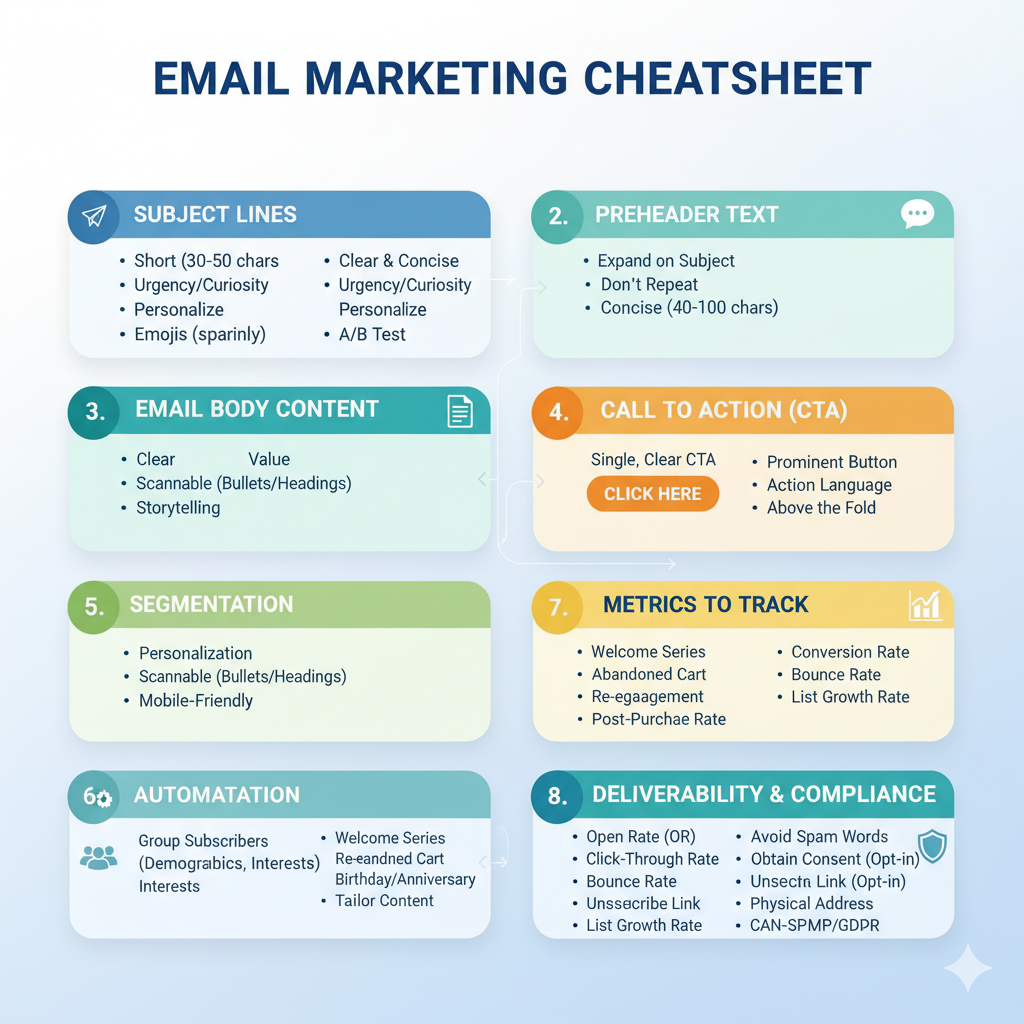
    Email Marketing Cheatsheet

    Email Marketing Cheatsheet

    1. Subject Lines:

    * Keep it short: Aim for 30-50 characters.

    * Be clear and concise: State the email’s purpose.

    * Create urgency/curiosity: Use phrases like “Limited Time,” “Don’t Miss Out,” or a compelling question.

    * Personalize: Use the recipient’s name if possible.

    * Emojis: Use sparingly and relevantly to stand out.

    * A/B Test: Always test different subject lines to see what performs best.

    2. Preheader Text:

    * Expand on the subject line: Provide more context or a call to action (CTA).

    * Don’t repeat the subject line.

    * Keep it concise: Typically 40-100 characters.

    3. Email Body Content:

    * Personalization: Address the recipient by name.

    * Clear Value Proposition: Immediately tell them what’s in it for them.

    * Scannable: Use short paragraphs, bullet points, and headings.

    * Compelling Storytelling: Engage your audience.

    * Strong Visuals: Use relevant images or GIFs.

    * Mobile-Friendly: Ensure your design looks good on all devices.

    * Proofread: Check for grammar and spelling errors.

    4. Call to Action (CTA):

    * Single, clear CTA: Focus on one primary action per email.

    * Prominent: Make it stand out (e.g., a button).

    * Action-oriented language: “Shop Now,” “Learn More,” “Download Your Guide.”

    * Above the fold (if possible): Place the main CTA where it’s immediately visible.

    5. Segmentation:

    * Group subscribers: Based on demographics, interests, purchase history, engagement, etc.

    * Tailor content: Send relevant emails to each segment for higher engagement.

    6. Automation:

    * Welcome Series: Onboarding new subscribers.

    * Abandoned Cart: Remind customers about items left in their cart.

    * Re-engagement: Win back inactive subscribers.

    * Birthday/Anniversary: Personalized greetings and offers.

    * Post-Purchase: Follow-ups, product care, cross-sells.

    7. Metrics to Track:

    * Open Rate (OR): Percentage of recipients who opened your email.

    * Click-Through Rate (CTR): Percentage of recipients who clicked a link.

    * Conversion Rate: Percentage of recipients who completed a desired action (e.g., purchase).

    * Bounce Rate: Percentage of emails that couldn’t be delivered.

    * Unsubscribe Rate: Percentage of recipients who opted out.

    * List Growth Rate: How quickly your subscriber list is growing.

    8. Deliverability & Compliance:

    * Clean your list regularly: Remove inactive or invalid addresses.

    * Avoid spam trigger words.

    * Obtain consent: Use opt-in forms.

    * Include an unsubscribe link: Make it easy to opt-out (it’s legally required!).

    * Include your physical address.

    * Follow CAN-SPAM, GDPR, and other relevant regulations.

    Here’s a visual summary of some key elements:

  • The best email marketing tips using AI

    The best email marketing tips using AI

    Using AI for email marketing can significantly boost your effectiveness by automating tasks, improving personalization, and optimizing campaign performance.1 Here are some of the best tips:

    1. Hyper-Personalization and Dynamic Content

    • Go Beyond the Name: Use AI to analyze comprehensive customer data (purchase history, browsing behavior, interests) to deliver highly relevant content, product recommendations, and offers tailored to each individual.2
    • Real-time Personalization: Use AI to dynamically change content within an email at the moment of opening, based on the customer’s most recent activity or in-stock products.3
    • Predictive Product Recommendations: Implement AI to suggest products a user is most likely to purchase next, based on their individual history and the behavior of similar customers.4

    2. Content Generation and Optimization

    • Draft Compelling Subject Lines and Previews: Use AI writers to generate multiple high-performing subject line options, often trained on past data to predict which will achieve the highest open rates.5
    • Generate Email Copy: Use AI tools to draft email body copy, calls-to-action (CTAs), and even entire sequences, then refine and “humanize” the content to match your brand’s voice.6
    • A/B/n Testing at Scale: Leverage AI to automate the testing of numerous variations of subject lines, copy, and CTAs (A/B/C/D testing and beyond) and automatically apply the winning elements to the rest of your sends.7

    3. Smart Automation and Timing

    • Optimal Send-Time Optimization: Stop guessing.8 Use AI to analyze the historical engagement data of each individual subscriber and automatically send the email at the precise time they are most likely to open it.9
    • Advanced Segmentation: Move past basic demographic segmentation.10 Use AI to group subscribers based on complex behavioral patterns, lead scoring (likelihood to convert), or churn prediction (likelihood to unsubscribe).11
    • Automated Lifecycle Emails: Set up sophisticated, AI-triggered email workflows for welcome series, abandoned carts, post-purchase follow-ups, and win-back campaigns, ensuring the right message is sent at the right stage.12

    4. List Health and Deliverability

    • Email List Cleanup: Employ AI to continuously scan and “clean” your email lists by identifying and removing invalid, inactive, or low-quality addresses to significantly improve your sender reputation and deliverability.13
    • Spam Filtering and Monitoring: Utilize AI to monitor your content against common spam triggers and ensure your emails are reaching the primary inbox, not the junk folder.14

    Crucial Best Practice: Keep the Human Touch

    • AI is an Assistant, Not a Replacement: Do not rely on AI to write your final copy. Use it for ideas, outlines, and rough drafts.15 Always review, edit, and inject your authentic brand voice and human empathy into the final email.16
    • Fact-Check Everything: AI-generated content can sometimes be inaccurate or outdated.17 Always verify any facts, figures, or product details before sending.
    • Ensure Relevance: Double-check that AI-segmented audiences and personalized content truly align with the current campaign goals and the customer’s journey.18
  • Quality Over Quantity: The Unsung Hero of Sales is Your Manually-Built Prospect List

    Quality Over Quantity: The Unsung Hero of Sales is Your Manually-Built Prospect List


    Quality Over Quantity: The Unsung Hero of Sales is Your Manually-Built Prospect List

    In the age of AI, automation, and “growth hacking,” the idea of doing anything manually can feel outdated. We’re told to scale everything, automate our outreach, and cast the widest net possible. But what if the secret to breaking through the noise and actually closing more B2B deals lies in a more deliberate, handcrafted approach?

    Enter manual B2B prospect list building.

    It’s the art and science of meticulously curating a list of ideal potential customers, one by one. It’s not about buying a massive, generic list of emails; it’s about building a targeted roster of companies and contacts that perfectly match what you have to offer. It’s the difference between shouting into a crowded stadium and having a meaningful conversation in a quiet room.

    If your outreach emails are getting abysmal open rates and your sales team is tired of chasing dead ends, it’s time to rediscover this powerful technique.

    What Exactly is Manual List Building (and What it’s Not)?

    Let’s be clear. Manual list building is the process of using human intelligence, research, and intuition to identify and qualify potential B2B customers. An analyst or sales representative actively seeks out companies and individuals who fit a predefined Ideal Customer Profile (ICP).

    Manual List BuildingBuying Automated Lists
    High-Quality & Curated: Every entry is researched and verified.Variable Quality: Often contains outdated or irrelevant contacts.
    High Relevance: Prospects perfectly match your ICP.Low Relevance: A “spray and pray” approach.
    Rich with Context: You gather notes for personalization.Data-Poor: Usually just a name, title, and email.
    Higher ROI: Leads to better conversations and conversion rates.Lower ROI: High volume of bounces and unqualified leads.
    Time-Intensive Upfront: Requires an initial investment of time.Fast to Acquire: You can get a list in minutes.

    The “Why”: Undeniable Benefits of Going Manual

    Investing time in manual prospecting isn’t a chore; it’s a strategic advantage. Here’s why it pays dividends:

    1. Unparalleled Lead Quality: Every single prospect on your list has been vetted. You know their company fits, their role is relevant, and they are the person you need to talk to. This dramatically reduces time wasted on unqualified leads.
    2. The Goldmine of Personalization: The research process uncovers invaluable tidbits. Did the company just secure a new round of funding? Did your contact just get promoted or write a blog post? These details are the fuel for hyper-personalized outreach that stands out from generic templates.
    3. Drastically Improved Conversion Rates: When you reach out to the right person at the right company with a message that resonates with their specific context, your chances of getting a positive response skyrocket. This translates directly to more meetings booked and more deals closed.
    4. Deep Understanding of Your Market: Manually building lists forces you to immerse yourself in your target market. You start to recognize trends, identify key players, and understand the nuances of the industry in a way that no purchased list can teach you.

    The “How”: A 5-Step Guide to Building Your Power List

    Ready to roll up your sleeves? Here is a repeatable framework for building a high-quality B2B prospect list.

    Step 1: Define Your Ideal Customer Profile (ICP) with Precision

    This is your foundation. If you get this wrong, everything else will be inefficient. Be brutally specific.

    • Industry/Vertical: (e.g., SaaS, FinTech, E-commerce)
    • Company Size: (e.g., 50-200 employees)
    • Geography: (e.g., North America, Western Europe)
    • Technology Stack: (e.g., Companies using HubSpot, AWS, etc.)
    • Recent Trigger Events: (e.g., Recently hired a VP of Sales, received Series B funding)

    Step 2: Identify Your Key Buyer Personas

    Within your ICP companies, who holds the keys? Who is the decision-maker, the influencer, the budget-holder?

    • Job Titles: (e.g., “Chief Technology Officer,” “VP of Marketing,” “Head of People”)
    • Seniority: (e.g., Director, C-Level, Manager)

    Step 3: Choose Your Hunting Grounds

    Where do these people and companies live online?

    • LinkedIn Sales Navigator: This is non-negotiable. Its advanced filters are your best friend for zeroing in on companies and contacts that match your ICP.
    • Industry-Specific Directories: Think G2, Capterra, or niche industry association websites.
    • Company Websites: The “About Us,” “Team,” or “Press” pages are often treasure troves.
    • Job Boards: A company hiring for a specific role is a huge buying signal.

    Step 4: The Research & Collection Phase

    This is where the manual work happens. Open a simple spreadsheet (Google Sheets or Excel) with the following columns:

    • First Name
    • Last Name
    • Job Title
    • Company Name
    • Company Website
    • LinkedIn Profile URL
    • Email Address
    • Personalization Notes (This is your secret weapon! Note a recent project, a post they shared, a common connection, etc.)

    Use your hunting grounds to find companies that fit your ICP, then dive in to find the individuals matching your buyer personas. Fill out your spreadsheet as you go.

    Step 5: Find and Verify Contact Information

    Finding a direct email is the final piece of the puzzle.

    • Use Tools Wisely: Services like Hunter.io, Lusha, or Apollo.io can help you find email addresses.
    • Educated Guessing: Many companies use standard formats (e.g., firstname.lastname@company.com).
    • VERIFY! Always use an email verification tool (like ZeroBounce or NeverBounce) before sending. A high bounce rate will damage your domain’s reputation and hurt your deliverability.

    Final Thoughts: From Prospector to Valued Partner

    Manual list building is more than an administrative task; it’s the first step in building a genuine business relationship. It forces you to think like your customer, understand their world, and approach them with respect and relevance.

    Stop buying anonymous lists and shouting into the void. Start building a curated list of future partners. The time you invest upfront will be returned tenfold in the quality of your conversations and the health of your pipeline.

  • AI in Recruitment Industry

    AI in Recruitment Industry

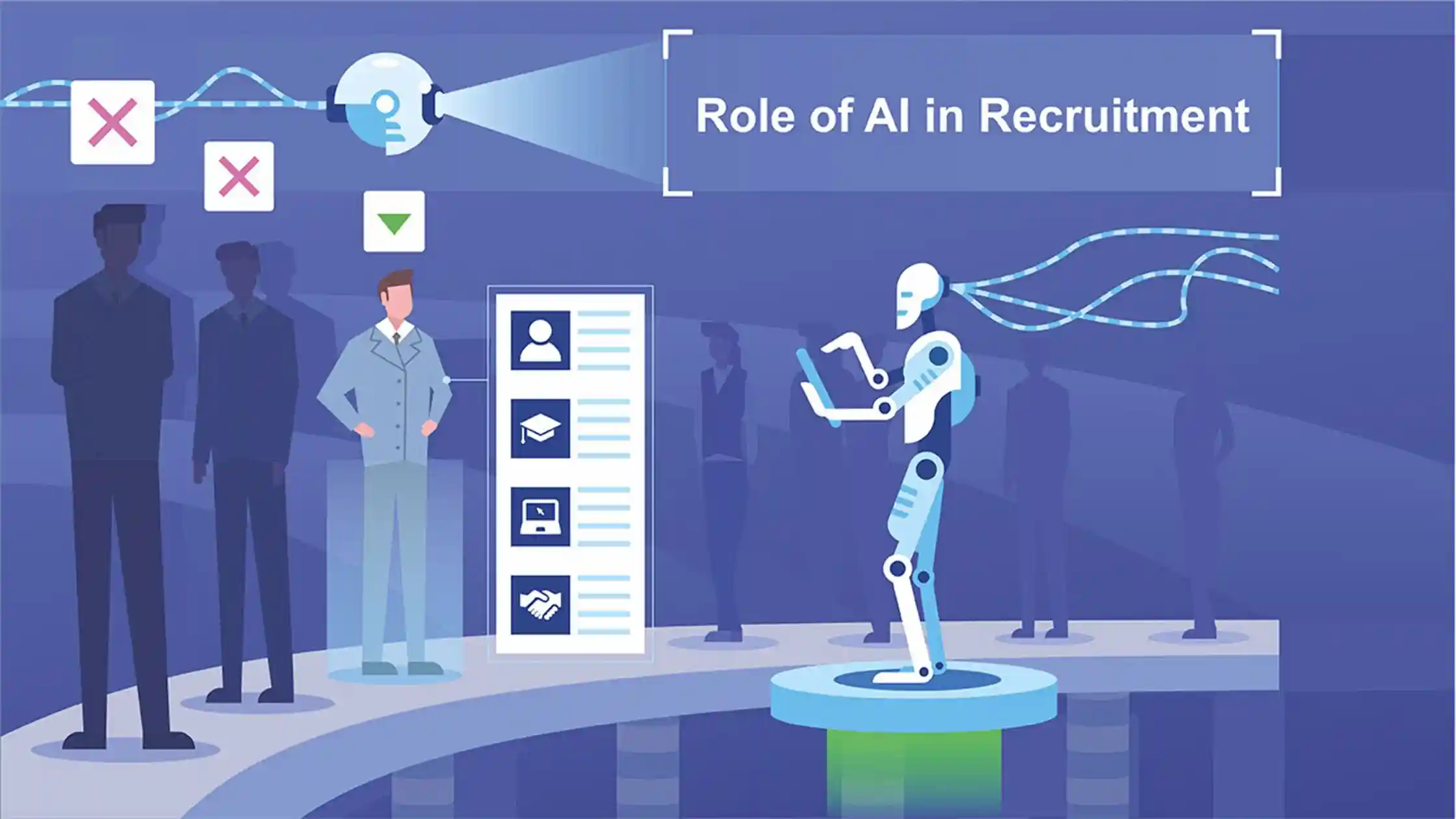
    AI is transforming the recruitment industry by automating repetitive tasks, improving efficiency, and enhancing the overall hiring process for both recruiters and candidates.1 Here are some of the key ways AI is being used in recruitment:

    1. Sourcing and Screening Candidates:2

    • Automated Resume Screening: AI-powered tools can quickly scan thousands of resumes and applications, identifying qualified candidates based on predefined criteria like skills, experience, and keywords.3 This saves recruiters significant time that would otherwise be spent on manual review.4
    • Wider Talent Pool: AI can analyze data from various sources, including job boards, social media, and internal databases, to find both active and passive candidates who may be a good fit for a role.5 This helps companies discover a more diverse and broader range of talent.6

    2. Enhancing the Candidate Experience:

    • AI Chatbots: Conversational AI can interact with candidates 24/7, answering their questions about the company, job requirements, and the application process.7 This provides a smoother and more engaging experience for job seekers and reduces the workload for recruiters.8
    • Personalized Communication: AI can help recruiters craft personalized outreach emails and messages to engage potential candidates, increasing response rates and creating a more positive impression of the company.9
    • Simplified Scheduling: AI-powered scheduling tools can automate the process of booking interviews, eliminating the time-consuming back-and-forth emails and calendar conflicts.10

    3. Reducing Bias and Improving Quality of Hire:11

    • Bias-Free Screening: By focusing on skills and qualifications rather than personal details, AI can help minimize unconscious human bias in the initial screening phase, leading to a more inclusive and diverse workforce.12
    • Data-Driven Decisions: AI tools use data and predictive analytics to help recruiters make more informed hiring decisions.13 They can analyze the profiles of successful past hires to identify traits and skills that lead to long-term success and better retention.
    • Objective Assessments: AI can be used to facilitate pre-interview assessments, such as one-way video interviews or skills tests, providing objective data on a candidate’s abilities and fit for the role.14

    4. Automating Administrative Tasks:

    • Job Description Generation: Generative AI can assist in writing customized and compelling job descriptions, saving recruiters time and helping to attract the right candidates.15
    • Interview Support: AI can transcribe and summarize virtual interviews, and some tools can even analyze verbal cues and body language to provide insights into a candidate’s temperament and communication style.16
    • Onboarding: AI can streamline the onboarding process by automating tasks like background checks, paperwork, and initial training, allowing new employees to get started faster.17

    While AI is a powerful tool for recruitment, it’s important to remember that it is meant to augment human recruiters, not replace them.18 By handling the more mundane, high-volume tasks, AI frees up human recruiters to focus on the strategic, high-value aspects of their job, such as building relationships with top talent and making final hiring decisions.19

  • The Dynamic Duo of Email and Social Media

    The Dynamic Duo of Email and Social Media

    Power Up Your Marketing: The Dynamic Duo of Email and Social Media

    In today’s digital landscape, businesses have a plethora of tools at their disposal to connect with their audience. Among the most effective and enduring are email marketing and social media. While often discussed separately, these two channels are far more powerful when used in tandem. Think of them not as rivals, but as complementary forces that can significantly amplify your marketing reach and impact.

    Email Marketing: Your Direct Line to Engagement

    Email marketing remains a cornerstone of digital strategy for a reason: it offers a direct and personal line of communication with your audience. When someone subscribes to your email list, they’re essentially giving you permission to land directly in their inbox. This allows for:

    • Personalized Messaging: Segment your audience and tailor your emails to their specific interests and needs. This level of personalization can lead to higher engagement and conversion rates.
    • Driving Conversions: Email is excellent for nurturing leads and guiding them through the sales funnel. You can share exclusive offers, product updates, and valuable content that encourages action.
    • Building Relationships: Consistent and valuable email communication can foster trust and loyalty with your audience over time.
    • Measuring Results: Email marketing platforms provide robust analytics, allowing you to track open rates, click-through rates, and conversions, giving you valuable insights into what resonates with your audience.

    Social Media: Expanding Your Reach and Sparking Conversation

    Social media platforms are vibrant hubs where conversations happen and communities are built. They offer unique opportunities for:

    • Broadening Your Audience: Social media allows you to reach a vast and diverse audience, increasing brand awareness and attracting new potential customers.
    • Real-Time Engagement: You can interact directly with your audience, respond to comments and questions, and participate in relevant conversations.
    • Visual Storytelling: Social media is ideal for showcasing your brand’s personality through visually appealing content like images, videos, and stories.
    • Gathering Feedback: Social listening on social media provides invaluable insights into customer sentiment, trends, and competitor activities.

    The Power of Synergy: How Email and Social Media Work Together

    The real magic happens when you integrate your email marketing and social media strategies. Here’s how you can leverage their combined power:

    • Grow Your Email List: Promote your email signup form on your social media profiles and in your posts. Offer exclusive content or discounts as an incentive to subscribe.
    • Amplify Your Content: Share your latest blog posts, newsletters, and promotions on your social media channels to reach a wider audience and drive traffic to your website.
    • Run Integrated Campaigns: Launch campaigns that span both email and social media. For example, tease a new product launch on social media and then provide more details and a pre-order link via email.
    • Gather Social Insights for Email Personalization: Pay attention to what your social media followers are talking about and use those insights to tailor your email content.
    • Encourage Social Sharing from Emails: Include social media sharing buttons in your emails to make it easy for subscribers to share your content with their networks.
    • Re-engage Inactive Subscribers via Social Media: If email engagement has dipped, try reaching out to inactive subscribers on social media to remind them of your brand’s value.

    Putting It All Together

    In conclusion, email marketing and social media are not mutually exclusive strategies; they are powerful allies in your marketing arsenal. By understanding their individual strengths and strategically integrating them, you can build stronger relationships with your audience, expand your reach, and ultimately drive better results for your business in Delhi and beyond. So, embrace the dynamic duo and watch your marketing efforts soar!

  • Email Marketing Services: Your Secret Weapon for Business Growth

    Email Marketing Services: Your Secret Weapon for Business Growth


    In the fast-paced world of digital marketing, it’s easy to get caught up in the latest trends. Social media, SEO, and paid ads all have their place. But there’s one tried-and-true channel that consistently delivers incredible results: email marketing. And at the heart of every successful email strategy is a great email marketing service.

    So, what exactly are these services, and why are they so crucial for your business?

    What is an Email Marketing Service?

    An email marketing service (often called an ESP, or Email Service Provider) is a platform that helps businesses create, send, and track email campaigns. While you could technically send emails one-by-one from your regular inbox, an email marketing service gives you the tools to do it at scale, professionally, and with powerful features that drive real business results.

    Think of it as the mission control for all your email communications. It’s where you manage your contact lists, design beautiful emails, automate your messaging, and analyze your performance.

    Why Your Business Needs an Email Marketing Service

    If you’re still on the fence about whether you need one, here are a few key reasons why these services are a game-changer:

    1. Unbeatable ROI (Return on Investment)

    Email marketing consistently boasts one of the highest ROIs of any marketing channel. For every dollar you spend, you can expect a significant return. This is because you’re communicating with a list of people who have already expressed interest in your brand—they’ve opted in to hear from you.

    2. Direct and Owned Communication

    Unlike social media platforms where a single algorithm change can drastically reduce your reach, your email list is an asset you own. You have a direct line of communication with your audience, free from the whims of third-party platforms. This control gives you stability and a reliable way to connect with your customers.

    3. Powerful Automation and Personalization

    Modern email services allow you to go far beyond a simple newsletter. You can set up automated email sequences that are triggered by a user’s actions.

    • Welcome Series: Automatically greet new subscribers and introduce your brand.
    • Abandoned Cart Emails: Remind customers of items they left in their cart, often with a special incentive.
    • Re-engagement Campaigns: Win back inactive subscribers with a targeted message.

    You can also personalize your emails to a hyper-specific degree. Addressing a subscriber by their first name is just the beginning. With the right data, you can send tailored content, product recommendations, and offers based on their past behavior and interests. This level of personalization makes your customers feel seen and valued, leading to higher engagement.

    4. Measurable Success

    How do you know if your marketing is working? An email marketing service provides detailed analytics that tell you exactly what’s happening with your campaigns. You can track:

    • Open Rate: How many people are opening your emails?
    • Click-Through Rate (CTR): How many people are clicking on the links inside?
    • Conversion Rate: Are people taking the desired action (e.g., making a purchase)?
    • Bounce Rate: Are your emails being delivered successfully?

    These metrics give you a clear picture of your campaign’s effectiveness, allowing you to test, learn, and optimize for even better results.

    Choosing the Right Email Marketing Service

    With so many options out there, how do you pick the right one for your business? Consider these factors:

    • Your Budget: Many services offer free plans or affordable tiers for small businesses, while others are built for enterprise-level needs.
    • Ease of Use: Do you need a drag-and-drop editor to create beautiful emails easily, or are you comfortable with more technical customization?
    • Features: What features are non-negotiable for you? List segmentation, advanced automation, A/B testing, and e-commerce integrations are all things to look for.
    • Support: Do they offer helpful customer support and resources in case you get stuck?

    Email marketing is far from a relic of the past. It’s a dynamic, powerful, and essential tool for any business looking to build lasting customer relationships and drive sustainable growth. By leveraging the right email marketing service, you can take your communication from a one-way message to a two-way conversation that builds loyalty and boosts your bottom line.