HOME » Page 19

Blog

  • Types of email marketing campaigns

    Types of email marketing campaigns

    Here are some types of email marketing campaigns: 

    • Welcome emails
    • Customer onboarding campaigns
    • Pre-launch campaigns
    • Product launch email campaigns
    • Post-launch campaigns
    • Survey email campaigns
    • Getting-to-know-you campaigns
    • Discount offer campaigns
    • New product announcement emails
    • Event invitations
    • Re-engagement emails
    • Promotional campaigns

    Some other types of email marketing include: 

    • Transactional emails
    • Retention emails
    • Newsletter emails
    • Lead nurturing emails
    • Informational emails
    • Product update emails
    • Digital magazine or newsletter

    Email marketing encompasses a diverse range of strategies, each aiming to connect with your audience and achieve specific goals. Here’s a breakdown of some key types:

    1. Promotional Emails:

    These are like friendly nudges from your favorite brands, featuring deals, discounts, and new product announcements. They aim to:

    • Boost sales and conversions: By highlighting special offers, promotional emails encourage customers to make purchases.
    • Increase brand awareness: Introducing new products or sharing interesting content keeps your brand at the forefront of your customers’ minds.

    2. Newsletter Emails:

    Think of these as informative updates, keeping your audience informed about company news, industry trends, or valuable tips. They help:

    • Nurture leads: By providing regular value, you stay top-of-mind and build trust with potential customers.
    • Educate your audience: Share informative content that showcases your expertise and positions you as a thought leader.

    3. Welcome Emails:

    These warm greetings set the stage for a positive relationship with new subscribers. They aim to:

    • Make a good first impression: Introduce your brand and what value you offer.
    • Encourage further engagement: Provide clear instructions on how to access your content or services.

    4. Transactional Emails:

    These emails handle the nuts and bolts of customer transactions, like order confirmations, invoices, and shipping updates. They ensure:

    • Transparency and communication: Keep customers informed about their purchases and build trust.
    • Opportunities for engagement: Include relevant product recommendations or personalized offers.

    5. Re-Engagement Emails:

    These emails gently reconnect with inactive subscribers who haven’t interacted with your brand in a while. They aim to:

    • Rekindle interest: Remind them of the value you offer and why they subscribed.
    • Win back customers: Offer exclusive discounts or personalized recommendations.

    6. Abandoned Cart Emails:

    These friendly reminders nudge customers who left items in their carts without completing their purchase. They aim to:

    • Reduce cart abandonment: Highlight the benefits of completing the purchase and offer incentives.
    • Increase sales conversions: Make it easy for customers to resume their checkout process.

    This is just a glimpse into the diverse world of email marketing. Remember, the most effective strategy relies on understanding your audience and tailoring your messages to their interests and needs.

  • Various ways AI is being used in Email Marketing

    Various ways AI is being used in Email Marketing

    Artificial intelligence (AI) is rapidly transforming the marketing landscape, and email marketing is no exception. By leveraging the power of AI, businesses can create more personalized, engaging, and effective email campaigns. Here are some of the key ways AI is being used in email marketing:

    1. Personalization:

    AI can analyze customer data to understand their preferences, purchase history, and behavior. This information can then be used to personalize email content, including product recommendations, subject lines, and email body copy. For example, an AI-powered email marketing platform might recommend sending different versions of an email with personalized product suggestions based on each recipient’s past purchases.

    2. Subject line optimization:

    Crafting compelling subject lines is crucial for getting emails opened. AI can analyze vast amounts of data to identify the most effective words and phrases to use in subject lines. This can significantly improve open rates and click-through rates.

    3. Dynamic content:

    AI can be used to generate dynamic content that changes based on individual recipients. This could include things like displaying different product images or videos, tailoring offers and discounts, or even changing the entire layout of the email.

    4. Send time optimization:

    The timing of your email can make a big difference in its success. AI can analyze data to determine the optimal time to send emails to each recipient based on their past behavior and engagement. This can help ensure that your emails are sent when they are most likely to be opened and read.

    5. Spam filtering:

    AI is also being used to improve spam filtering, which can help ensure that your emails reach the intended recipients. AI-powered spam filters can identify patterns and characteristics of spam emails and prevent them from landing in inboxes.

    6. Automation:

    AI can automate many of the repetitive tasks involved in email marketing, such as sending welcome emails, abandoned cart reminders, and birthday greetings. This can free up your time to focus on other aspects of your marketing strategy.

    7. Predictive analytics:

    AI can be used to predict customer behavior and identify potential churn risks. This information can then be used to send targeted emails to re-engage customers and prevent them from unsubscribing.

    8. A/B testing:

    AI can be used to run A/B tests on different elements of your email campaigns, such as subject lines, content, and layouts. This can help you determine which versions of your emails perform best with your audience.

    9. Sentiment analysis:

    AI can be used to analyze the sentiment of customer feedback in emails. This can help you understand how your customers are feeling about your brand and identify areas for improvement.

    10. Image recognition:

    AI can be used to recognize images in emails. This can be used to personalize product recommendations or to trigger specific email campaigns based on the images that customers include in their emails.

    By using AI in these ways, businesses can create more effective and engaging email marketing campaigns that drive results. As AI technology continues to evolve, we can expect to see even more innovative ways to use AI in email marketing in the future.

    I hope this gives you a good overview of the various ways AI is being used in email marketing. Please let me know if you have any other questions.

  • How to build a cold email prospect list?

    How to build a cold email prospect list?

    Building a solid prospect list for cold emails is crucial for the success of your outreach campaign. Here’s a step-by-step guide to help you:

    1. Define your ideal customer profile (ICP):

    • Who are you trying to reach? Be specific about their demographics, company size, industry, job titles, and pain points. The more detailed your ICP, the more targeted your list will be.

    2. Leverage existing resources:

    • Customer Relationship Management (CRM): Analyze your current customer base to identify similar companies and individuals.
    • Website analytics: See which companies and individuals visit your website, especially those exploring relevant content.
    • Social media: Utilize LinkedIn Sales Navigator or similar tools to find prospects matching your ICP by company, job title, and interests.

    3. Explore external data sources:

    • Professional directories: Use platforms like ZoomInfo, LeadGenius, or Dun & Bradstreet to search for leads based on your ICP criteria.
    • Industry publications and events: Attend industry conferences or webinars and connect with relevant professionals.
    • News and articles: Look for mentions of companies facing challenges your solution addresses, then identify key decision-makers.

    4. Enrich your contact details:

    • Email finders: Tools like Hunter.io or Voila Norbert can help you find email addresses for your prospects.
    • Social media verification: Double-check email addresses and job titles through LinkedIn or other social media platforms.

    5. Segment your list:

    • Group your prospects based on factors like company size, industry, or pain points. This allows you to personalize your email outreach for better engagement.

    Pro tips:

    • Focus on quality over quantity: A smaller, highly-targeted list is better than a large, generic one.
    • Comply with regulations: Follow GDPR and other privacy laws when sourcing and communicating with prospects.
    • Utilize enrichment tools: Tools like Clearbit or FullContact can add valuable information like company size and funding to your list.
    • Continuously update your list: Keep your data fresh by removing inaccurate or outdated information.

    Building a valuable cold email prospect list requires effort and ongoing maintenance. By following these steps and utilizing available resources, you can create a targeted list that maximizes your outreach success.

    Remember, personalization is key to effective cold emailing. Leverage your prospect information to personalize your outreach and show them how you can solve their specific problems.

  • Email Marketing Statistics for 2023

    Email Marketing Statistics for 2023

    Email marketing remains a powerful tool for businesses of all sizes, and its effectiveness is backed by some impressive statistics in 2023:

    Reach and Growth:

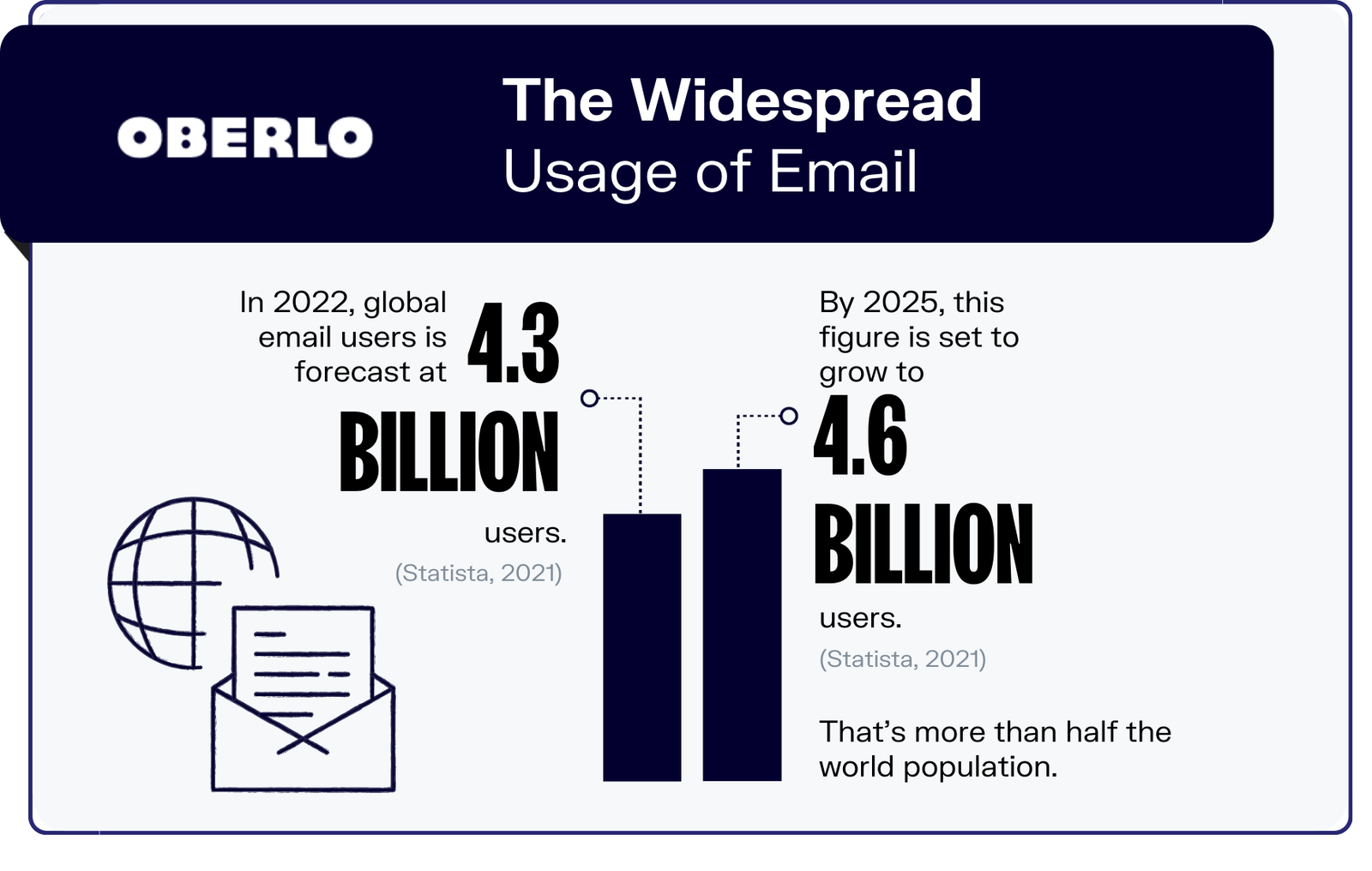
    • 4.37 billion emails are sent and received daily worldwide, a significant increase from 319 billion in 2022. (Source: Oberlo)
    • Over 4.7 billion people will be active email users by 2026, up from 4.26 billion in 2022. (Source: Statista)
    • 55% of consumers say email is their preferred digital channel for business communication. (Source: Constant Contact)

    Engagement and ROI:

    • Average email open rate across all industries is 26.80%. (Source: GetResponse)
    • Average email click-through rate across all industries is 1.89%. (Source: GetResponse)
    • Emails with images offer an almost 10% boost in open rates. (Source: GetResponse) Opens in a new window www.smartinsights.com bar chart showing the average email open rate and clickthrough rate across all industries
    • For every $1 spent on email marketing, the average return on investment (ROI) is $44. (Source: Mailchimp)

    Usage and Trends:

    • 31% of marketers use email marketing as their primary customer acquisition channel. (Source: HubSpot Blog Research)
    • 80% of SMBs use email marketing for customer retention. (Source: HubSpot Blog Research)
    • Mobile email opens now account for up to 60% of all email opens, depending on the industry. (Source: The Loop Marketing)
    • Personalization is key: Nearly 80% of business leaders say consumers spend more (an average of 34 percent more) when their experience is personalized. (Source: Backlinko)

    Overall, email marketing remains a vital tool for businesses to reach their target audience, engage with customers, and drive sales. By understanding the latest statistics and trends, businesses can develop effective email marketing strategies that deliver results.

    I hope these statistics give you a good overview of the current state of email marketing in 2023.

  • Is cold emailing effective?

    Is cold emailing effective?

    Absolutely a big “YES.”

    Cold emailing can be a highly effective way to reach new potential customers, partners, or collaborators, but its effectiveness depends on several factors:

    Effectiveness Factors:

    • Targeted approach: Sending personalized emails to individuals with specific needs or interests significantly increases your response rate. Imagine sending an email about marketing software to a CEO instead of a marketing manager.
    • Value proposition: Clearly communicate how your product or service solves a problem or improves the recipient’s life. Focus on benefits, not features.
    • Engaging copy: Craft compelling subject lines and email content that pique curiosity and encourage the recipient to learn more. Think of it like sending a captivating sales pitch in an email.
    • Professionalism: Maintain a professional tone and format in your emails. Avoid spammy tactics like excessive exclamation points or ALL CAPS.
    • Don’t give up after one email. Send well-timed follow-up emails to increase your chances of getting a response. Remember, not everyone opens your email the first time they receive it.

    Image: A graph showing the relationship between personalization and response rate in cold emailing. As personalization increases, so does the response rate.

    Effectiveness Statistics:

    • According to a study by Yesware, personalized cold emails have a 50% higher response rate than generic emails.
    • A study by HubSpot found that cold emails with a clear call to action have a 371% higher click-through rate.
    • A study by Xant found that the average response rate for cold emails is 10.5%, but this can vary significantly depending on the industry and target audience.

    Overall, cold emailing can be a valuable tool for businesses and individuals looking to connect with new people and grow their network. However, it’s important to use it ethically and strategically to avoid being seen as spam. By following the tips above, you can increase your chances of success with cold emailing.

    Here are some additional things to keep in mind:

    • Cold emailing is not a numbers game. It’s more important to send fewer, high-quality emails to the right people than to send a lot of generic emails to everyone.
    • Be patient. It can take time to build relationships through cold emailing. Don’t get discouraged if you don’t see results immediately.
    • Track your results. Keep track of your open rates, click-through rates, and response rates so you can see what’s working and what’s not.
    • Use a cold email outreach tool. There are a number of cold email outreach tools available that can help you automate and track your cold emailing efforts.
  • How to start a newsletter?

    How to start a newsletter?

    Launching your own newsletter can be a rewarding experience, helping you connect with an audience and share your passion. Here’s a step-by-step guide to get you started:

    1. Define your purpose and niche:

    • What’s your message? What information or inspiration do you want to offer?
    • Who’s your audience? Who are you trying to reach and what are their interests?
    • What makes you unique? What sets your newsletter apart from others in the same niche?

    2. Build your email list:

    • Create a compelling signup form: Clearly communicate the value your newsletter offers and make it easy to subscribe.
    • Promote your newsletter: Share your signup link on your website, social media, and relevant online communities.
    • Offer incentives: Entice subscribers with a freebie or exclusive content.

    3. Choose your email marketing platform:

    • Popular options: Mailchimp, ConvertKit, Substack, and many more.
    • Consider your needs: Pricing, features, ease of use, and integration with other tools.

    4. Design your newsletter:

    • Keep it simple and visually appealing: Use clear fonts, consistent branding, and engaging images.
    • Focus on mobile-friendliness: Most people read emails on their phones.
    • Prioritize value over aesthetics: Content should be informative, engaging, and relevant to your audience.

    5. Craft your content:

    • Plan your schedule: Decide how often you’ll send emails and stick to a consistent schedule.
    • Variety is key: Mix different content formats like articles, interviews, Q&As, and short videos.
    • Write in a clear and engaging style: Be authentic and conversational, avoiding overly technical jargon.
    • Include a call to action: Encourage readers to visit your website, respond to a survey, or share your newsletter.

    6. Analyze and improve:

    • Track key metrics: Open rates, click-through rates, and unsubscribe rates.
    • Gather feedback: Ask your readers what they like and what they want to see more of.
    • Continuously test and refine your approach: Experiment with different formats, topics, and call to actions to find what resonates best with your audience.

    Here are some additional resources to help you on your newsletter journey:

    Remember, starting a successful newsletter takes time and effort. But by following these steps and continuously learning and adapting, you can build a thriving community around your passion and achieve your communication goals.

  • Where Do I Start With Generative AI?

    Where Do I Start With Generative AI?

    Diving into the world of generative AI can be exciting, but it’s also easy to feel overwhelmed by the possibilities. To get you started, here are a few different approaches you can take, depending on your interests and goals:

    1. Identify your focus:

    • User: If you’re curious and want to experience generative AI without coding, try online platforms like Playground by Google AI or NightCafe Creator. These offer user-friendly interfaces to play with text, image, and code generation.
    • Super User: Explore pre-trained models through interactive notebooks on sites like Colab or Gradio. This lets you experiment with code and prompts without building your own model.
    • Developer: If you’re comfortable with coding, jump into building your own models using frameworks like TensorFlow or PyTorch. Plenty of tutorials and open-source code are available online.
    • Researcher: Dive deep into the research side of generative AI. Follow top researchers on Twitter, read research papers, and attend conferences to stay updated on the latest advancements.

    2. Choose your path:

    • Creative Applications: Unleash your creativity by generating text formats like poems, scripts, and music, or create stunning images and artwork.
    • Problem-Solving Applications: Explore how generative AI can tackle real-world challenges like drug discovery, materials science, and personalized learning.
    • Business Applications: Learn how businesses leverage generative AI for marketing, product design, and customer service optimization.

    3. Build your knowledge:

    • Get familiar with the basics: Understand core concepts like GANs, VAEs, and autoregressive models. Resources like MIT’s “Generative Deep Learning” course or Stanford’s CS231n can help.
    • Learn basic coding: Python is the most common language for building generative AI models. Online tutorials and beginner-friendly courses can get you started.
    • Join the community: Connect with other generative AI enthusiasts on forums, online communities, and social media groups. You can learn from each other, share tips, and stay updated on the latest developments.

    Remember, the best way to get started is to choose an approach that excites you and take small steps. Don’t be afraid to experiment, ask questions, and learn from your mistakes. The possibilities with generative AI are endless, so have fun and explore!

  • How to ask for referrals?

    How to ask for referrals?

    Getting referrals can be a powerful way to boost your network and open doors to new opportunities. The key is to ask in the right way, making it easy and compelling for people to connect you with the right folks. Here are some tips on how to ask for referrals effectively:

    1. Build strong relationships: People are more likely to refer someone they know and trust. Focus on building genuine connections with people in your field, offering help and support whenever possible. Be a giver first, and the asking will come more naturally.

    2. Be specific about your needs: Don’t just ask for a “referral.” Be specific about the type of people you’re looking to connect with, their skills and experience, and the opportunities you’re interested in. The more targeted your request, the easier it is for people to identify appropriate connections.

    3. Choose the right method: The best way to ask for a referral depends on your relationship with the person. For close contacts, a face-to-face conversation or phone call might be ideal. For less direct connections, email or LinkedIn messages can be effective.

    4. Make it easy for them to help: Provide your referrer with information about yourself, such as your resume or website, that they can share with your potential connection. Consider offering to write an introduction email or LinkedIn request to save them time.

    5. Express your gratitude: Thank your referrer for their time and effort, regardless of the outcome. If you secure a connection through their referral, be sure to let them know and express your appreciation.

    Here are some additional tips:

    • Highlight your accomplishments: Briefly mention your successes and qualifications to make yourself a more attractive candidate for referral.
    • Offer incentives (optional): Some businesses offer referral bonuses or rewards, which can further incentivize people to connect you with the right individuals.
    • If you haven’t heard back after a reasonable amount of time, send a brief follow-up message.
    • Don’t be afraid to ask: The worst that can happen is someone says no. The more you ask, the more comfortable you’ll become with the process, and the more likely you are to get positive results.

    Remember, referrals are a two-way street. By building strong relationships and offering value to others, you’ll naturally attract valuable referrals in return.

  • What are the biggest trends in Influencer marketing?

    What are the biggest trends in Influencer marketing?

    Influencer marketing is a dynamic landscape, constantly evolving with new trends and strategies emerging. Here are some of the biggest trends shaping the industry in 2024:

    1. AI Integration:

    • AI-powered influencer discovery and analysis tools: Platforms are using AI to help brands identify the right influencers based on their target audience, engagement, and brand affinity.
    • AI-generated content: Some brands are experimenting with AI-created influencer personas to deliver tailored content and reach specific demographics.
    • Performance optimization: AI can analyze campaign data to optimize influencer selection, content formats, and budget allocation for better results.

    2. Multi-Platform Approach:

    • Focus on cross-platform creators: Consumers are increasingly spread across platforms like TikTok, Instagram, YouTube, and Twitch. Brands are looking for influencers who can reach diverse audiences across these channels.
    • Live shopping integration: Live shopping experiences on platforms like TikTok and Instagram are gaining traction, and brands are partnering with influencers to host live product demonstrations and sales events.
    • Short-form video dominance: Short-form video content, like TikTok and Instagram Reels, is dominating social media. Brands are working with influencers who create engaging short-form content that resonates with younger audiences.

    3. Emphasis on Authenticity and Transparency:

    • Micro and nano influencers: Consumers are increasingly skeptical of celebrity endorsements and prefer relatable micro-influencers (10k-50k followers) and nano-influencers (1k-10k followers) with more genuine connections to their audience.
    • Focus on long-term partnerships: Brands are moving away from one-off campaigns and building long-term partnerships with influencers for consistent content creation and brand advocacy.
    • Transparency and disclosure: Consumers are demanding transparency about sponsored content. Brands and influencers are being more upfront about collaborations to build trust with their audience.

    4. Rise of New Influencer Types:

    • Employee influencers: Leveraging the online followings of your own employees who embody your brand values can create authentic and relatable content.
    • Virtual influencers: AI-generated virtual influencers are becoming a new way to reach younger audiences and experiment with innovative content formats.
    • Community-driven influencers: Brands are partnering with individuals who lead online communities relevant to their target audience to tap into existing trust and engagement.

    5. Performance-Based Deals:

    • Shift from vanity metrics to ROI: Brands are moving beyond follower counts and likes and focusing on metrics like website traffic, conversions, and sales generated by influencer campaigns.
    • Performance-based contracts: More brands are tying influencer compensation to concrete campaign performance metrics, ensuring a more accountable and results-driven approach.

    These are just some of the biggest trends shaping influencer marketing in 2024. As the industry continues to evolve, staying informed about these trends will help brands develop effective and successful influencer marketing strategies.

  • Emotional Marketing

    Emotional Marketing

    Emotional marketing is a strategy that taps into the power of human emotions to connect with consumers on a deeper level and influence their purchasing decisions. It goes beyond simply promoting the features and benefits of a product or service, and instead, focuses on evoking feelings that resonate with the target audience.

    Here are some key elements of emotional marketing:

    • Understanding your audience: The first step to successful emotional marketing is knowing who you’re trying to reach. What are their hopes, dreams, fears, and desires? What kind of emotions do they associate with your product or service? Once you have a good understanding of your audience, you can start to craft messages that will resonate with them.
    • Telling a story: Humans are hardwired to respond to stories. By weaving a narrative that evokes emotions, you can make your brand and products more relatable and memorable. The story doesn’t have to be complex; it can be as simple as sharing a customer testimonial or showing how your product makes a difference in people’s lives.
    • Using visuals: Images and videos are powerful tools for evoking emotions. Choose visuals that are emotionally charged and that align with the message you’re trying to convey. For example, if you’re selling a children’s toy, you might use images of happy kids playing.
    • Appealing to different emotions: Different emotions can be used to achieve different marketing goals. For example, you might use humor to make your brand more likable, or you might use nostalgia to trigger positive memories of your product or service.
    • Creating a sense of community: Humans are social creatures who crave connection. Emotional marketing can help you create a sense of community around your brand by encouraging customers to share their experiences and connect with each other.

    Emotional marketing can be a powerful tool for businesses of all sizes. By understanding your audience and using the right tactics, you can create marketing campaigns that resonate with consumers on a deeper level and drive results.

    Here are some examples of successful emotional marketing campaigns:

    • Dove’s Real Beauty campaign: This campaign challenged traditional beauty standards by featuring real women of all shapes and sizes. The campaign resonated with women who were tired of unrealistic beauty ideals and helped Dove to position itself as a brand that celebrates all women.
    • Nike’s Just Do It campaign: This campaign is simple but powerful. It appeals to people’s desire to achieve their goals and live their dreams. The campaign has been incredibly successful over the years and has helped Nike to become one of the most iconic brands in the world.
    • Old Spice’s The Man Your Man Could Smell Like campaign: This campaign is humorous and irreverent, but it also taps into men’s desire to be seen as confident and attractive. The campaign has been a huge success and has helped Old Spice to revitalize its brand.

    Emotional marketing is not a magic bullet, but it can be a powerful tool for businesses that want to connect with their customers on a deeper level and drive results. By understanding your audience and using the right tactics, you can create marketing campaigns that resonate with consumers and make a lasting impression.